The Power of Music and the Arts in Dementia and Alzheimer’s Care
How simple, meaningful activities can reconnect, calm, and support quality of life
It’s hard to find someone who doesn’t connect with music or art in some way. A familiar song, a favourite colour, or even the act of creating something can spark emotion, memory, and connection.
For individuals living with dementia or Alzheimer’s, these moments can be deeply therapeutic.
Today, music and art therapies are increasingly recognized as powerful, non-pharmacological approaches that support traditional care. They don’t replace medical treatment, but they do enhance it in meaningful, human ways.

Why Music and Art Work
As dementia progresses, certain parts of the brain are affected more than others. Interestingly, areas connected to music, creativity, and emotion often remain accessible longer.
This is why someone who struggles with conversation may still:
- Hum along to a familiar song
- Respond emotionally to music
- Engage in creative expression
These therapies activate multiple areas of the brain at once—supporting not just cognition, but identity, emotion, and connection.
Emotional Benefits: Reducing Anxiety and Creating Comfort
Anxiety, agitation, and depression are common in dementia care.
Music and art can help create a sense of calm and familiarity by:
- Evoking positive memories through familiar songs
- Providing a soothing, structured activity
- Offering an outlet for emotional expression
Even a short session can shift someone from distress to a more grounded, peaceful state.

Cognitive Benefits: Stimulating the Mind
While these therapies are not a cure, they can help engage the brain in meaningful ways.
Activities involving rhythm, melody, colour, and shape can:
- Improve focus and attention
- Trigger memory recall
- Support recognition and processing
- Encourage decision-making through guided tasks
Structured sessions, especially when repeated consistently, can help maintain cognitive function longer.

Communication & Social Benefits: Connection Without Words
As verbal communication becomes more difficult, many families feel a sense of loss.
Music and art offer another way to connect.
Through these activities, individuals may:
- Express emotions without needing words
- Engage in shared experiences with others
- Show increased eye contact, smiling, or participation
Group settings, in particular, can foster a sense of belonging and reduce feelings of isolation for both clients and caregivers.

Physical Benefits: Supporting Movement and Coordination
Many music and art activities naturally encourage gentle movement, such as:
- Clapping or tapping to rhythm
- Light dancing or swaying
- Painting or drawing
These actions help maintain:
- Motor coordination
- Hand-eye coordination
- Sensory engagement
Even small, repetitive movements can support mobility and overall physical well-being.

Practical Music Therapy Activities That Make a Difference
Here are simple, effective ways to incorporate music into care:
- Singing familiar songs → encourages memory recall and emotional comfort
- Simple percussion (drums, shakers, clapping) → supports movement and engagement
- Music-guided movement → promotes coordination and energy
- Personalized playlists → helps reduce anxiety and soothe agitation
- Group sing-alongs → builds connection and shared joy
These activities are not only beneficial for the individual—they also help caregivers create more positive, meaningful interactions
Practical Music Therapy Activities That Make a Difference
Below are simple, effective ways music can be incorporated into dementia and Alzheimer’s care—whether at home or with professional support:
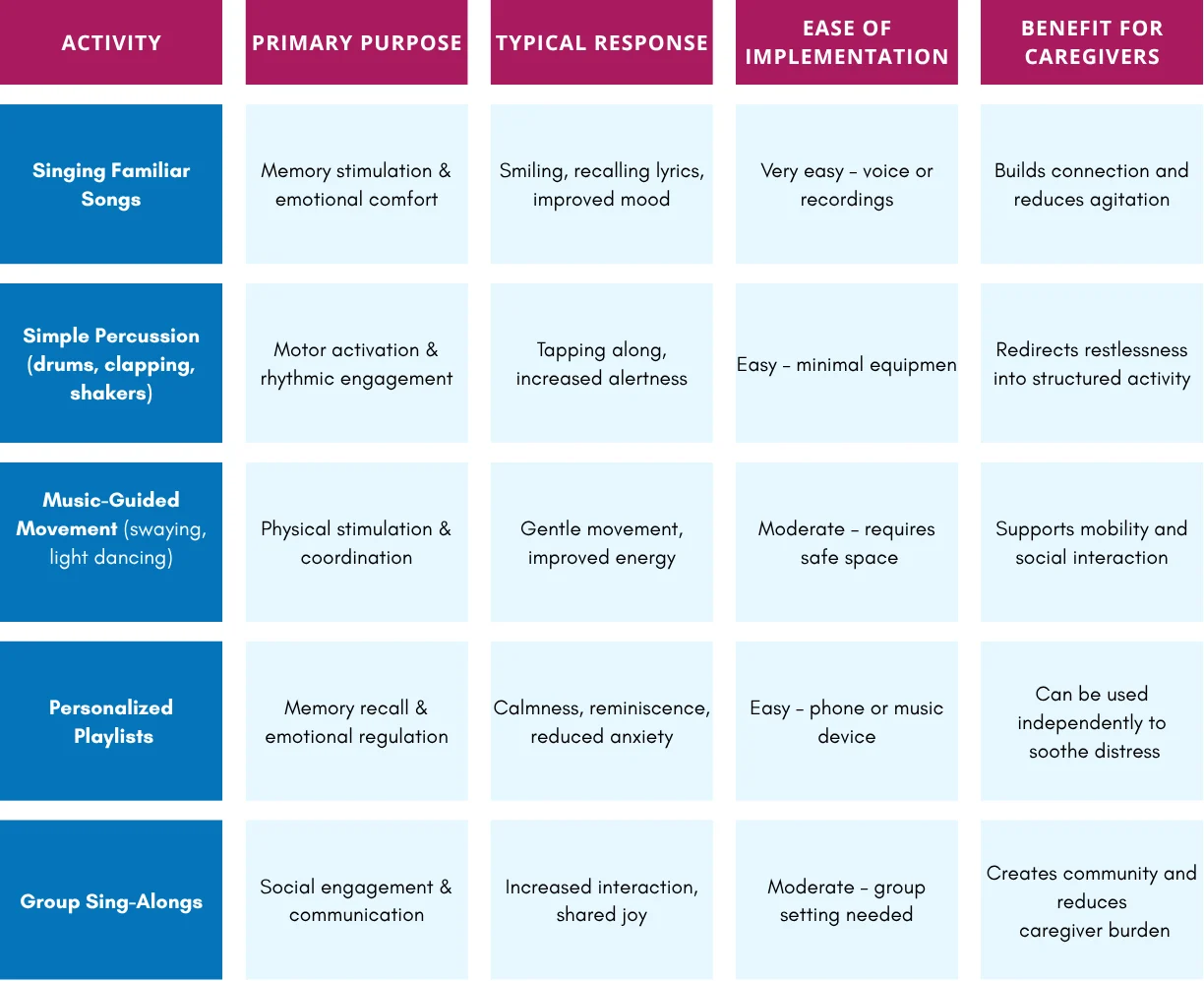
While these activities are simple, the real impact comes from incorporating them regularly into daily routines. At TLC, our caregivers are trained to integrate meaningful activities like music and art into care not as occasional add-ons, but as part of a consistent, person-centered approach.”
A Note for Families and Caregivers
Caring for someone with dementia or Alzheimer’s can be emotionally and physically demanding.
Finding ways to connect is often one of the biggest challenges.
This is where approaches like music and art therapy can make a real difference.
And just as importantly, having the right support in place ensures these moments happen consistently, not just occasionally.
At TLC, our caregivers that specialize in Alzheimer’s and Dementia care are trained to incorporate meaningful, person-centered activities into daily care. Whether it’s playing a favourite song during a routine, encouraging creative expression, or simply creating a calm and engaging environment, these small moments can significantly improve quality of life, for both the individual and their family.
Conclusion: More Than Care: Connection
Music and art therapies remind us of something important:
Even as memory changes, the need for connection, expression, and joy remains.
By integrating these approaches into care, we can help individuals:
- Feel calmer and more secure
- Stay engaged and connected
- Experience moments of recognition and joy
Because in dementia care, success isn’t just measured in clinical outcomes
it’s measured in moments that still feel like them.